Masterplan Fundão
Location
Fundão, Portugal
Fundão, Portugal
Area
21,700m2
21,700m2
Start
2022
2022
Status
Masterplan permit approved. On-going project.
Masterplan permit approved. On-going project.
Residential
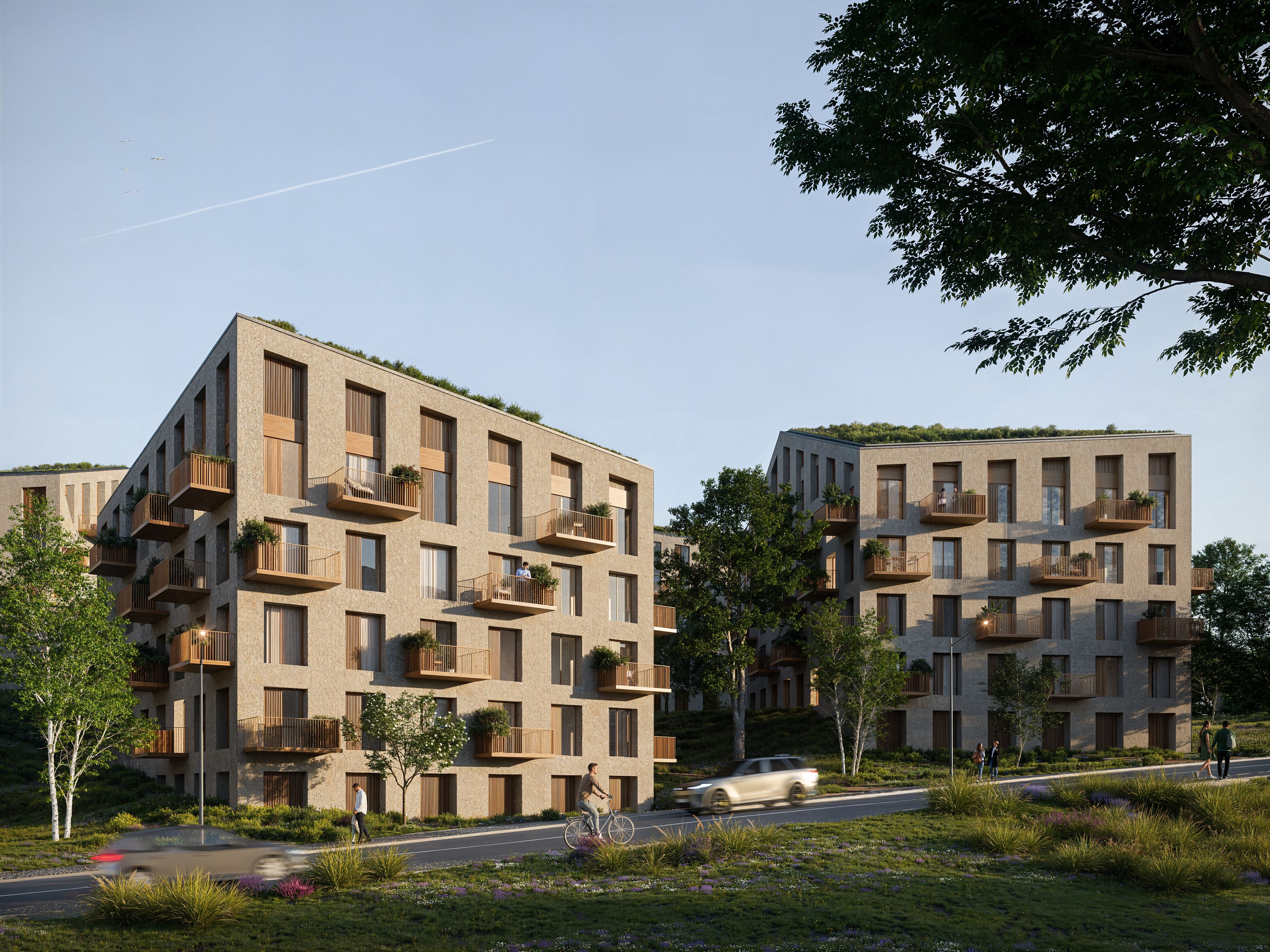
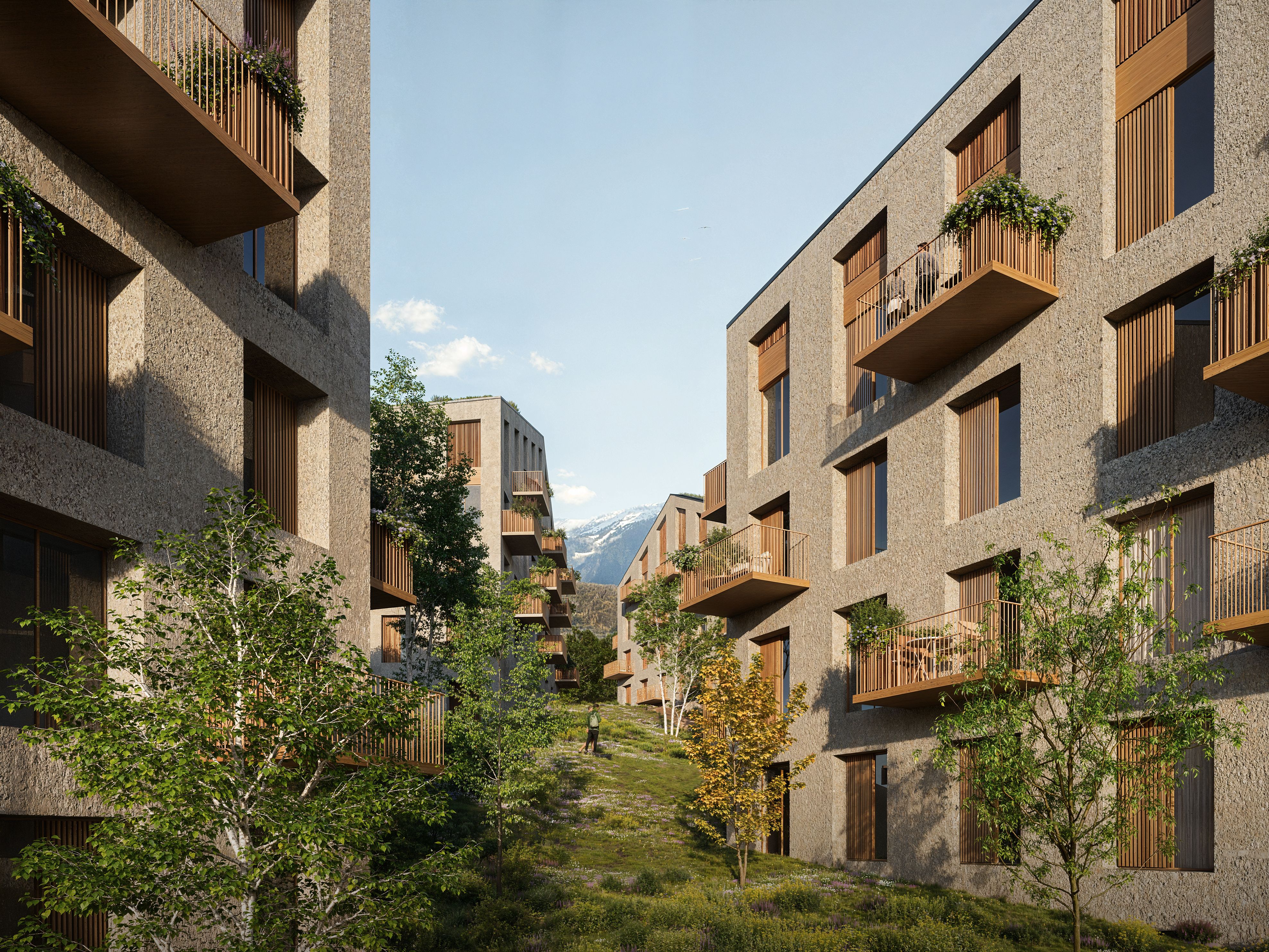
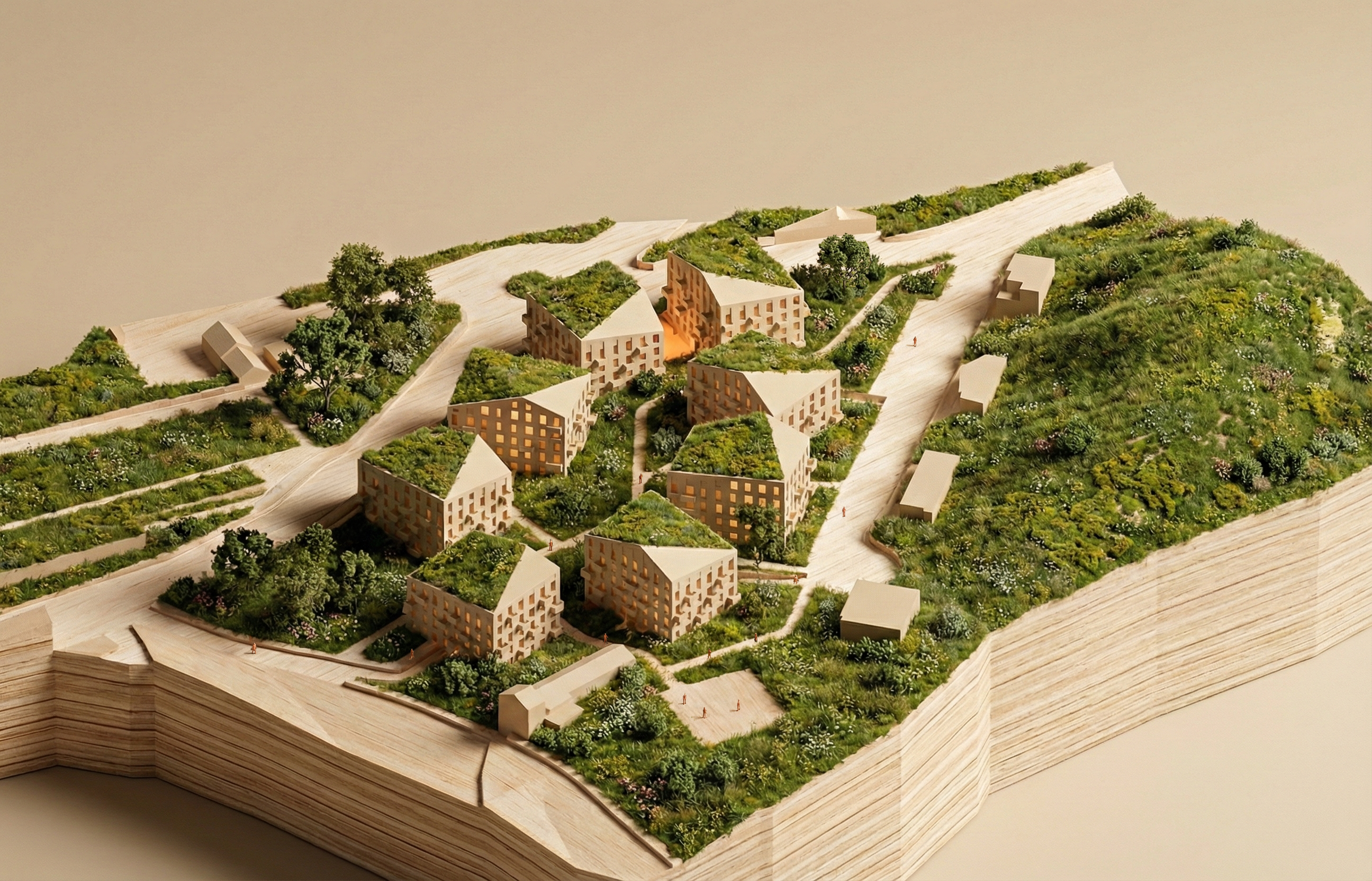
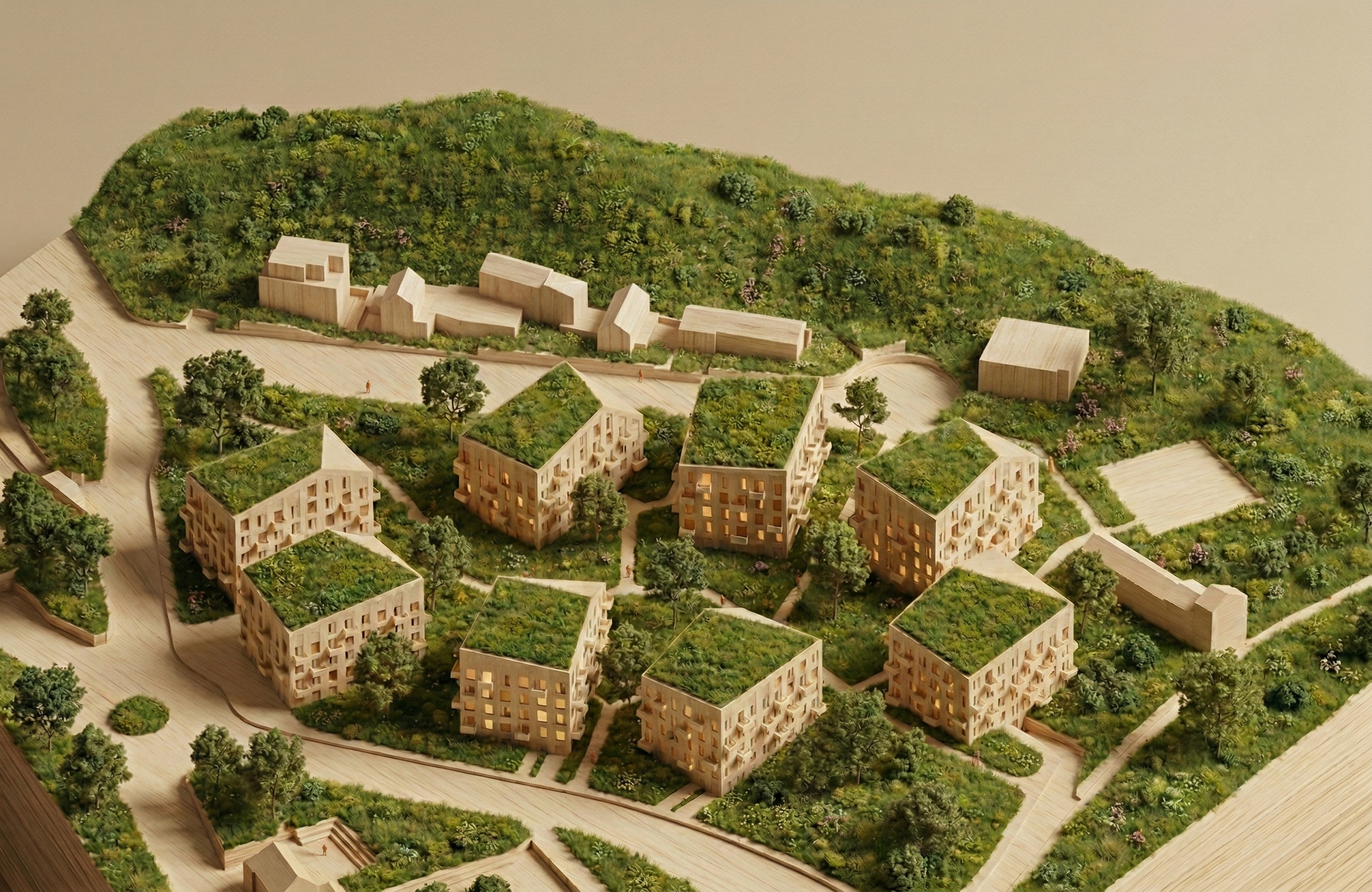
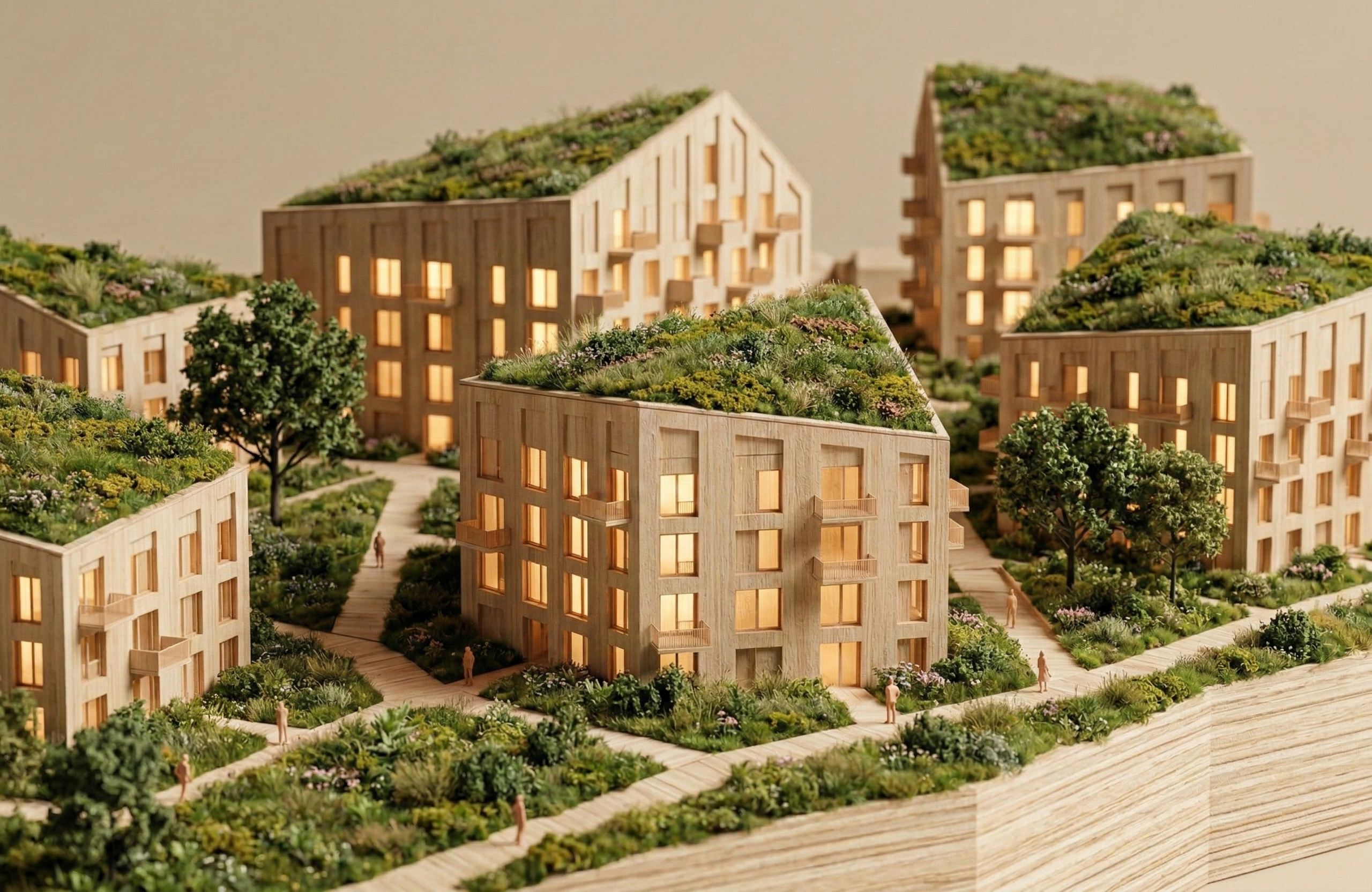
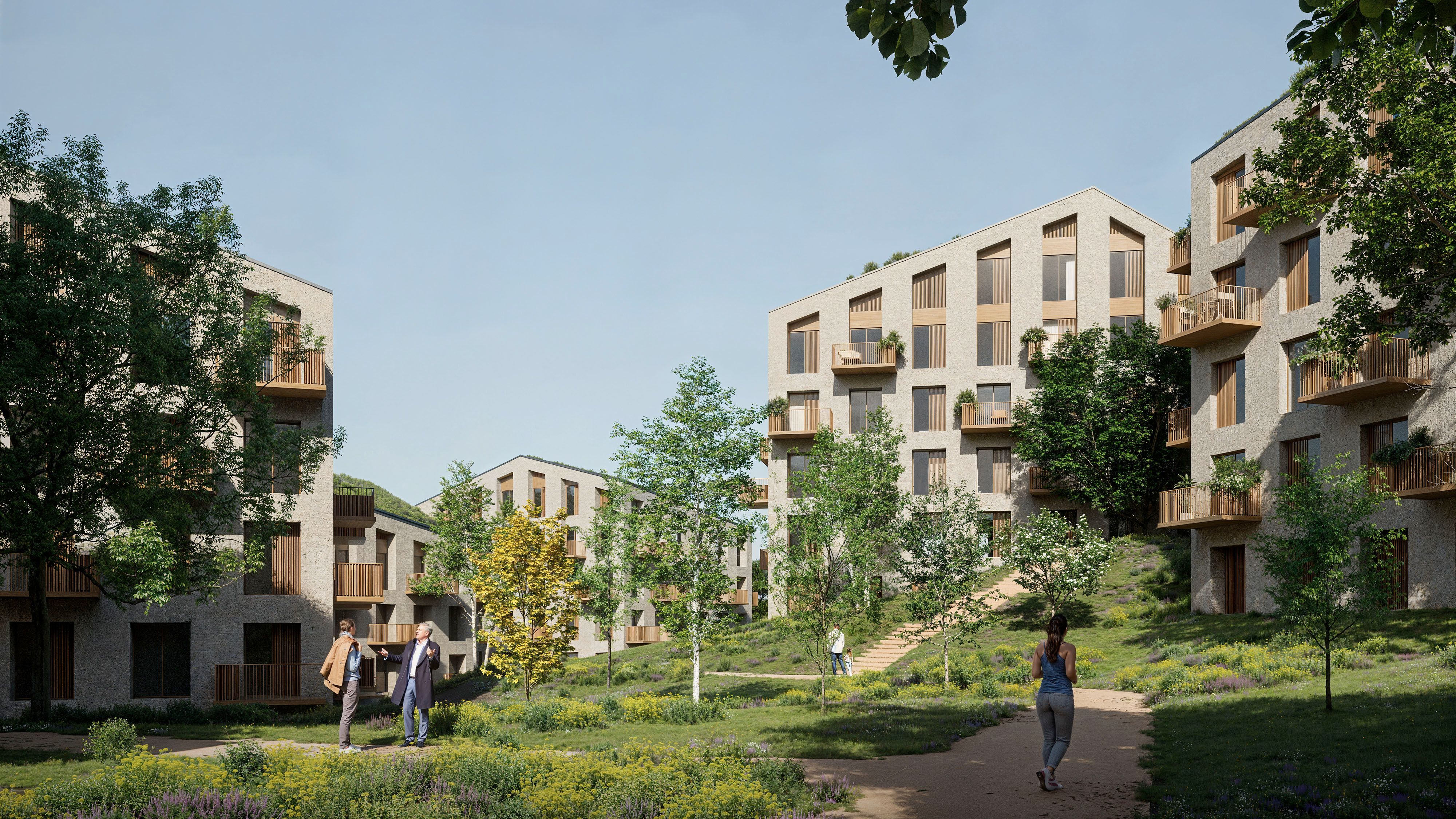
Recently approved, the Fundão Masterplan represents a significant step in the development of this region, introducing a new residential neighborhood with approximately 21,700 m² of gross floor area. Conceived as a strategic intervention within the city’s expansion zone, the project establishes a clear dialogue between the existing urban fabric, the intermediate growth area, and the natural backdrop of the Serra da Gardunha.
The proposal seeks to define a balanced transition between city and landscape. Rather than forming a continuous built mass, the residential buildings adopt a fragmented configuration that responds directly to the site’s topography. This approach allows visual permeability across the development, enabling views towards the mountain range and preserving a strong relationship with the surrounding vegetation. The space between buildings fosters openness and connectivity, creating a high–quality public space that links the city to its natural environment.
Public space plays a central role in the masterplan. Designed as an accessible and inclusive setting, it promotes social interaction while supporting local biodiversity through green areas, pedestrian connections and landscape continuity. The urban design encourages movement across different levels of the terrain, creating a coherent and human–scale public realm that integrates naturally with the wider city.
Material choices and architectural expression aim to root the project in its local context. The use of natural, locally sourced materials reinforces a sense of place, while extensive green roofs provide ecological and visual benefits. These landscaped roofs reduce the perceived height and impact of the volumes when viewed from the city, establishing a soft transitional edge between the urban fabric and the Serra da Gardunha.
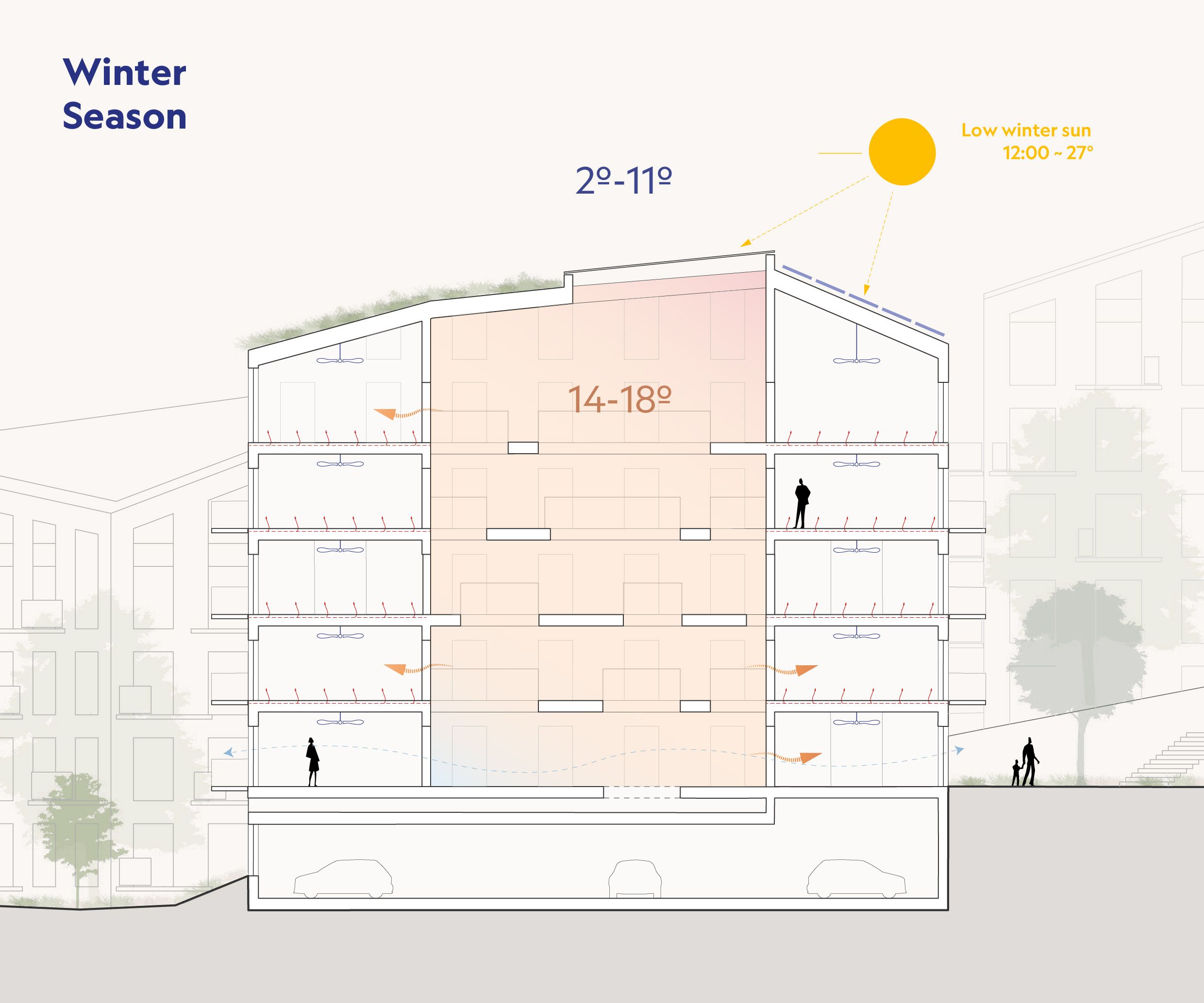
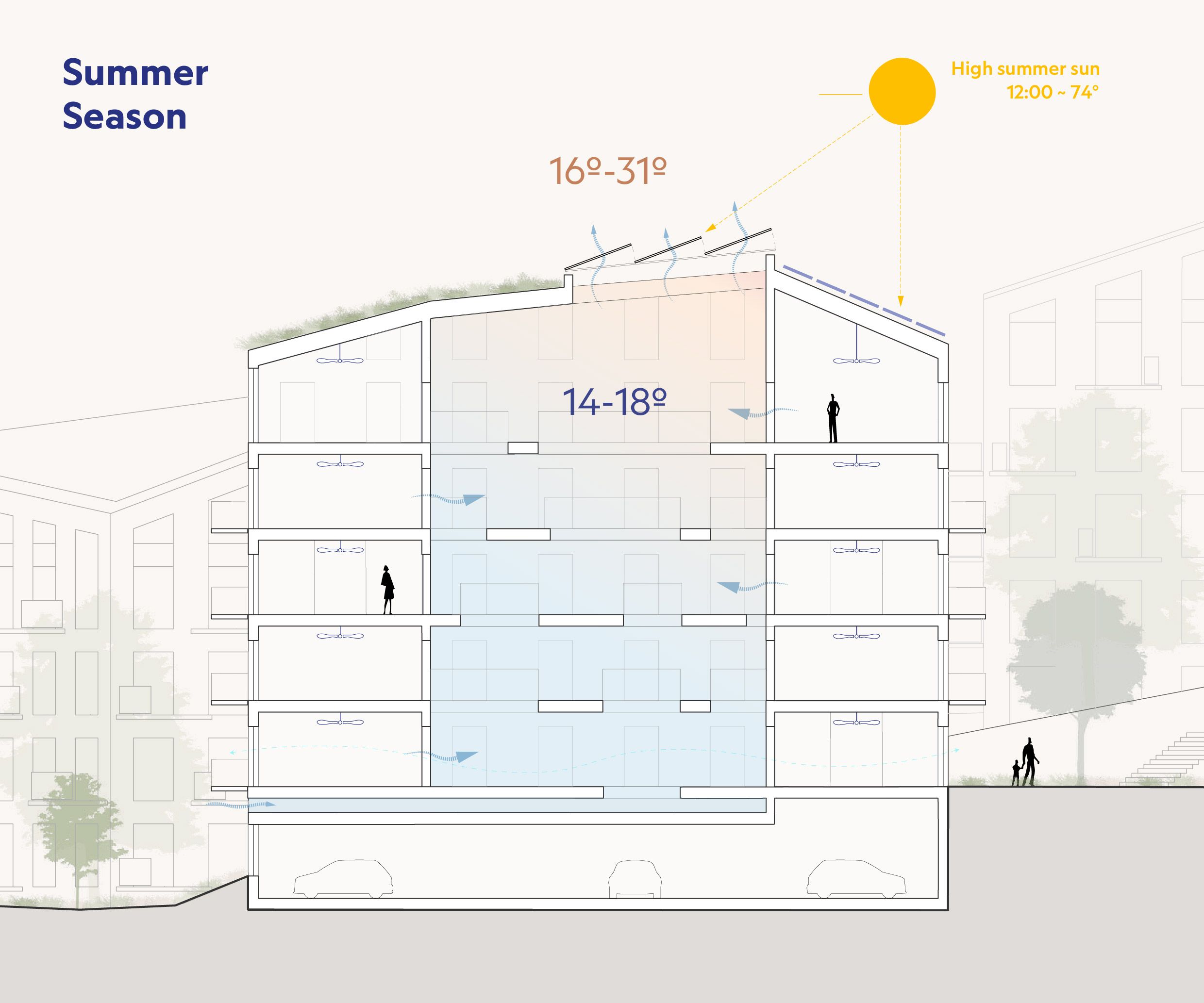
Internally, passive and bioclimatic principles guide the design. A central interior hall functions as a thermal buffer, moderating seasonal temperature contrasts and improving comfort while reducing energy demand. Together, these strategies create a contemporary residential development that aligns urban growth with environmental sensitivity and long–term regeneration.